If you have never had a heel repaired, the worn corner on your shoe looks minor right up until it is not. Heel caps wear down, the heel base underneath starts to grind away, your gait tilts, and a small, quick repair becomes a bigger rebuild. In Monroe, a first heel visit to a shop like Victory Shoe Repair is one of the simplest introductions to how a cobbler works.
Here is what actually happens, step by step, from reading the wear pattern on your own shoes to picking up a level pair.
First, read your own heels
Set the shoes on a table and look from behind. Most people wear the outside edge of the heel first, which is a normal pattern. Heavy wear on one side only, wear that runs into the heel base, or a heel that has gone soft and spongy all tell a story about gait, fit, or simply mileage. Catching wear while it is still in the replaceable cap or top lift is the whole game. The cap is made to be sacrificed. The heel base is not.
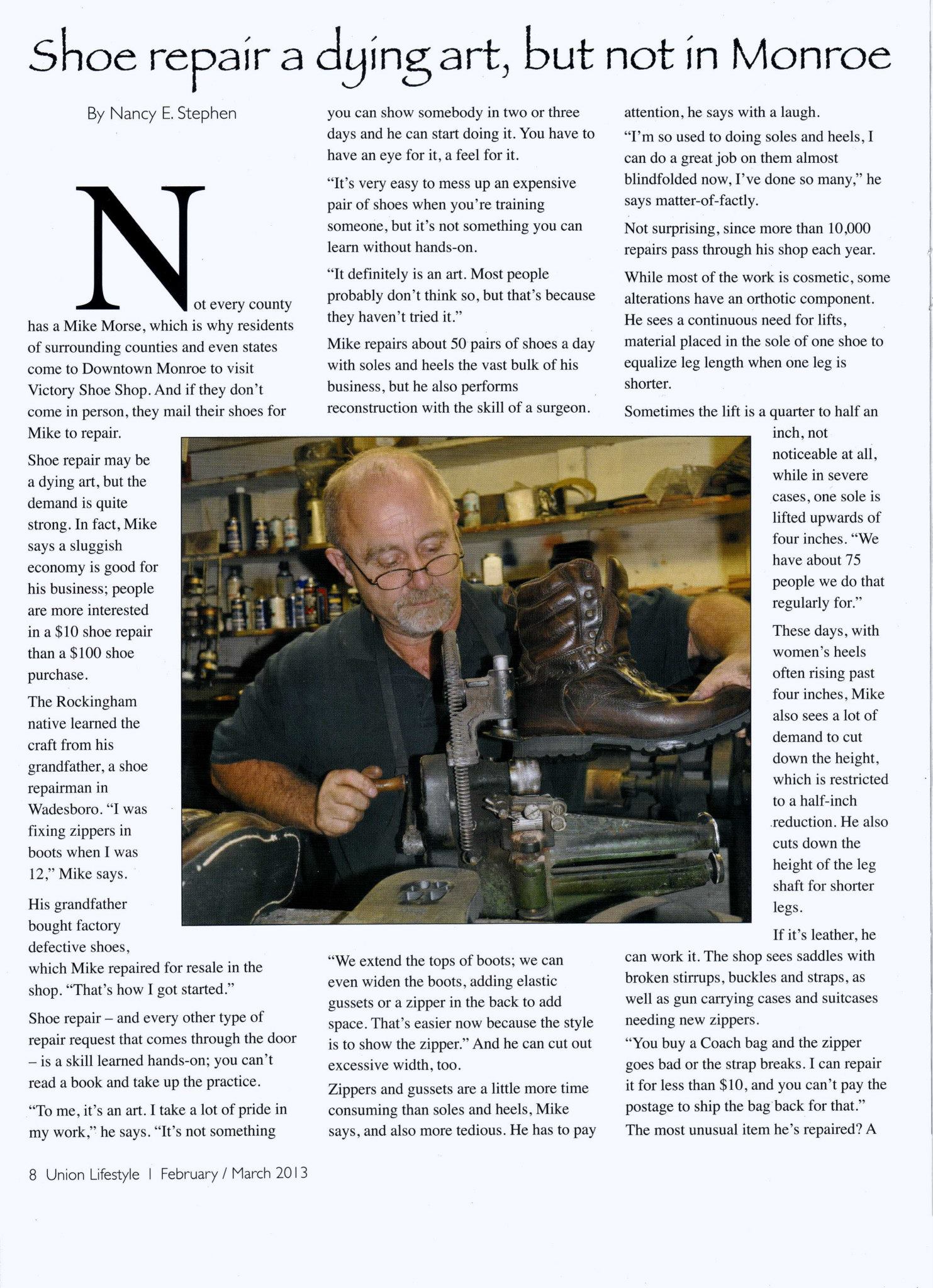
Your first heel repair, step by step
- Bring both shoes, even if one heel looks fine. Heels are replaced as a pair so both sides sit level and wear together.
- The cobbler checks the wear pattern and the heel base, and taps and flexes the heel to confirm it is solid enough to hold a new cap.
- The worn cap, sometimes called a top lift, is removed and the heel base is leveled and cleaned so the new piece sits flat.
- A new cap in rubber, leather, or a combination is fitted, trimmed to the heel shape, and attached securely.
- The edges are finished and matched to the shoe, and the pair is checked side by side for level stance.
- You pick up shoes that stand straight, grip better, and no longer click or tilt as you walk.
Taps, caps, and when each makes sense
Heel taps are small protective pieces, often nylon or metal, fitted to the wear corner of a new or newly repaired heel to slow future wear. They suit people who wear one corner hard and fast. They can feel clicky on hard floors in metal form, which is why many wearers choose nylon. A cap replacement is the standard repair once the original lift is worn through. If wear has eaten into the heel base itself, the cobbler may need to rebuild that base first, which is still very doable when caught reasonably early.
Women's narrow heels deserve a special note. The small plastic lift on a stiletto-style heel wears and sometimes snaps, exposing a metal pin that damages floors and makes walking unstable. That tiny piece is a quick replacement, and replacing it at the first wobble saves the heel structure underneath.
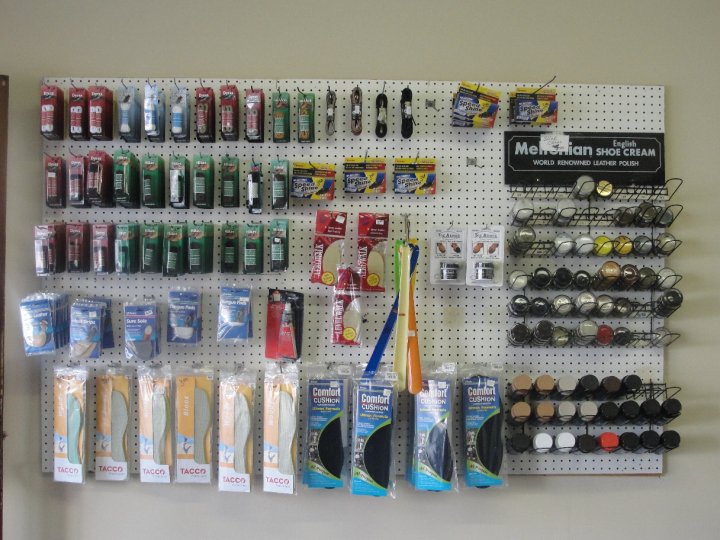
How to make heels last longer
Rotate pairs so no single heel takes every day's wear. Replace caps at the first sign of the base showing through, not after a season of grinding on it. Be aware of your pattern: if you consistently destroy one corner in a few months, mention it, because taps or a different cap material may suit you better, and a cobbler who sees extreme one-sided wear may suggest you mention it to a clinician if it comes with pain.
The first visit usually ends with a small surprise: how much steadier the shoes feel for such a modest repair. Level heels change posture at the margins all day long.
Expect a few practical questions at the counter. The cobbler may ask how many days a week you wear the pair, whether you walk on pavement, tile, or gravel, and whether one shoe always wears faster than the other. Those answers guide the choice of cap material: rubber for grip and quiet, leather for a traditional dress finish, or a combination that puts rubber at the strike corner. If you commute on foot in Monroe, say so, because a cap chosen for office carpet wears very differently from one chosen for sidewalks and parking lots in the rain.
Common questions
How do I know my heels need replacing?
Look for the cap worn down to, or through, its edge, a tilted stance from behind, or a clicking, uneven feel on hard floors. If the heel base itself is wearing, go in promptly.
Can just one shoe's heel be replaced?
It can, but pairs are normally done together. Matching height and wear on both sides keeps your gait level and prevents the older heel from failing soon after.
Do heel taps make shoes noisy?
Metal taps click on hard floors, while nylon taps are much quieter. Tell the cobbler where you wear the shoes most and they can steer the choice.
← All guides from Victory Shoe Repair← Back to Victory Shoe Repair