Leather is skin, and it behaves like it. Left alone, it dries, cracks, and gives up. Kept conditioned, rested, and clean, a pair of leather shoes in Monroe can outlast several pairs that were worn daily and never touched. The neglect story is almost always the same: no single disaster, just small skipped steps that compound until the leather splits across the flex point and no polish can call it back.
At shops like Victory Shoe Repair, the leather care conversation comes down to three habits: conditioning, polishing, and rest days. None is complicated. All three are cheaper in effort than the repair bill of consequences, stated in wear rather than money.
The numbers behind the habits
Conditioning: feeding the leather
Conditioner replaces the oils leather loses to heat, sun, air conditioning, and plain time. Apply it to clean, dry shoes, work it in thinly, let it absorb, and buff off the excess. Heavy coats do not help; they sit on the surface, attract dust, and can darken light leather unevenly. Condition before the leather looks thirsty. Once deep cracks appear, conditioner can soften the surrounding area but cannot weld a crack shut.
Shoes that live near heating vents, in a hot car, or in direct sun in a window dry out faster. In Piedmont summers, that list covers a lot of Monroe garages and mudrooms, so check stored pairs once a season even if you are not wearing them.
Polishing: protection with a finish
Polish does a different job from conditioner. Cream polish adds color and some nourishment; wax polish builds a harder, shinier layer that sheds water and resists scuffs. Most regular wearers do well with cream for routine care and wax when they want a sharper finish. Brush before and after: a quick horsehair brush-down after wearing removes dust and redistributes surface wax, and it takes less than a minute.
Polish will not hide neglect for long. It sits poorly on dirty leather, flakes over unconditioned cracks, and rubs off on socks and trouser hems when overapplied. Clean first, condition second, polish last, in thin layers.
Rest days: the habit that does the most
Feet sweat, and leather absorbs that moisture all day. Wearing the same pair daily keeps the leather damp, softens glues and linings, stretches the upper out of shape, and invites odor that never fully leaves. A full day or two of rest, ideally with unvarnished cedar shoe trees inserted, lets the pair dry, hold its shape, and recover. Two pairs rotated can each last markedly longer than two pairs worn one at a time until they fail, which is the quiet math behind the classic two-pair advice.
What waiting costs the shoe
Dry leather flexes thousands of times a day at the toe crease. Each flex deepens a crack that conditioning would have prevented. Water then enters through the cracks, stains the leather from inside, and rots stitching. By the time a customer asks whether cracked uppers can be restored, the honest answer is usually that the damage can be slowed, not reversed. The small habit was the whole opportunity, and it was measured in minutes a month.
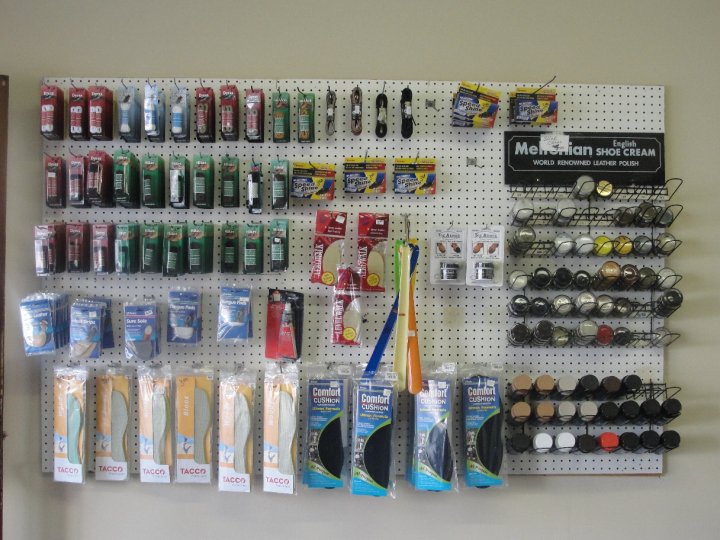
Suede, nubuck, and boots need a small variation on the same routine. Brush suede instead of polishing it, use products made for its nap, and waterproof work boots before a wet season rather than after the first soaking. Smooth leather dress shoes, rough work boots, and suede all fail from dryness and dirt in the end; they just ask for different surface care on the way there. When in doubt, bring the pair in and ask which products on the shelf match its leather, because the wrong cream on suede or the wrong wax on a delicate finish creates a new problem while solving none.
Common questions
How often should I condition leather shoes?
For regular wear, every three to four months is a common rhythm, and more often if shoes dry out in heat or get wet often. Condition when leather looks dull and feels stiff, before cracks form.
Do I need shoe trees?
They help a lot. Unvarnished cedar trees absorb moisture, reduce odor, and hold the upper's shape while the pair rests, which works together with rest days.
Can polish fix scuffs and color loss?
Cream polish can even out light scuffs and restore color at the surface. Deep cuts, cracks, and worn-through leather need a cobbler's repair, not more polish.
← All guides from Victory Shoe Repair← Back to Victory Shoe Repair