A shoe can be the right size and still fit badly in one exact spot: a toe that pinches, a heel that slips, a bone that rubs. Before you give the pair away, know that a cobbler in Monroe has a set of fit fixes that solve many of these complaints. Some you can try at home first. Others need the stretching machine, pads, and judgment at a shop like Victory Shoe Repair.
This how-to draws the line clearly: the simple parts you can do, and the point where professional work takes over.
What you can do at home
Start with socks and timing. A thicker or thinner sock changes fit more than most people expect, and feet swell through the day, so judge fit in the afternoon, not first thing in the morning. For a mild pinch, wearing the shoes indoors with thick socks for short sessions can ease leather gradually without risking damage. Lacing changes help heel slip more than any product: a runner's loop using the extra top eyelet locks the heel back in many lace-up styles.
What to skip at home: freezer bags of water, aggressive heat, and soaking leather in stretching sprays meant for other materials. Ice expansion can split seams and damage linings, and heat dries leather out. Home methods should be gentle and reversible, because the professional options below are neither expensive in effort nor hard on the shoe when done right.
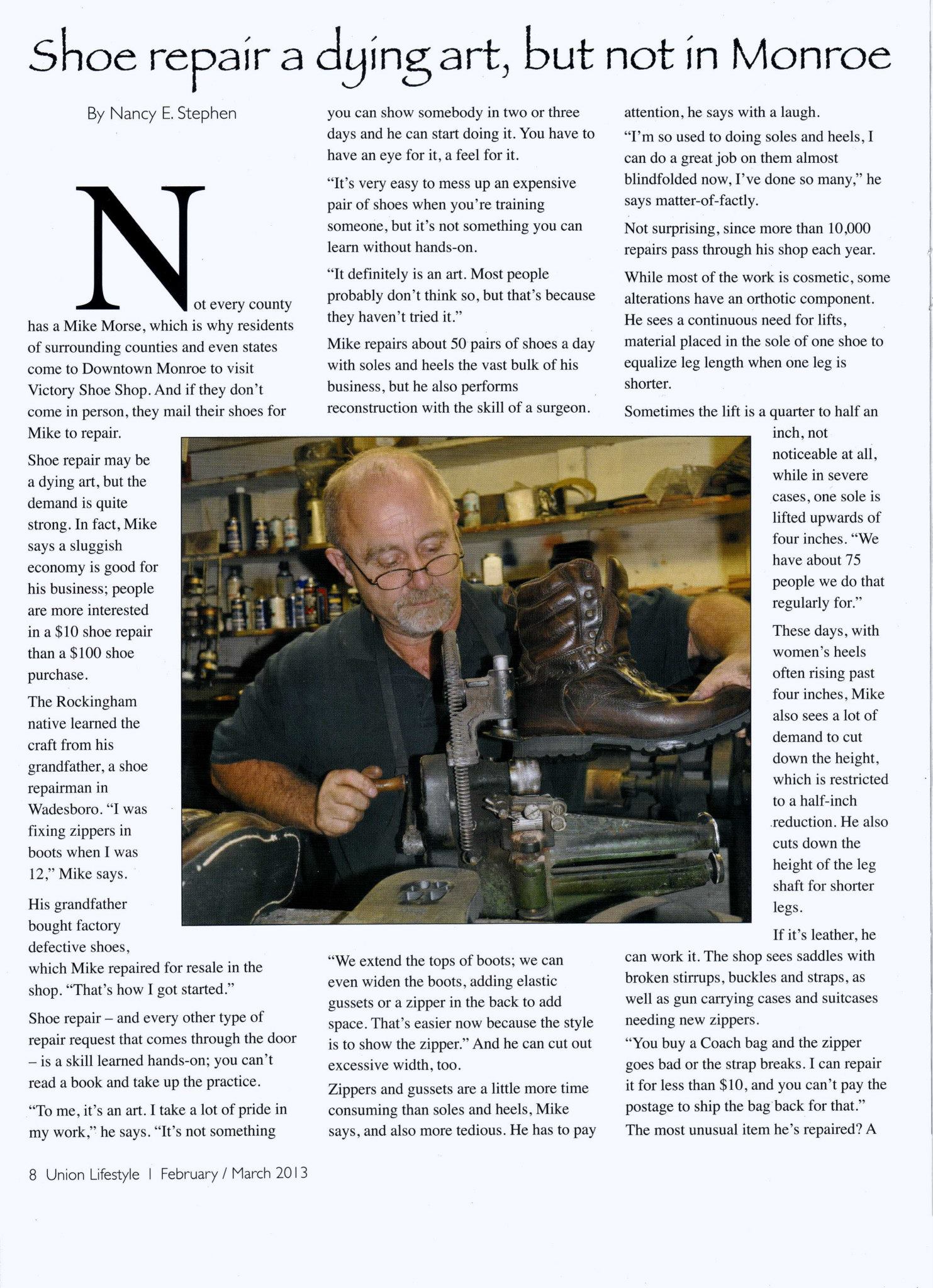
Professional fixes, step by step
- Describe the exact spot. Point to where it pinches or slips, and say when it happens: first steps, after an hour, or only on one foot.
- The cobbler checks whether the problem is width, a single pressure point, heel slip, or length, because each has a different fix.
- For a pressure point, a spot stretcher targets just that area, such as over a bunion or toe joint, without loosening the whole shoe.
- For overall tightness, the shoe goes on a stretching machine, often overnight, sometimes with a stretching solution to help leather relax.
- For heel slip, options include tongue pads, heel grips, insoles, or an orthopedic lift adjustment where relevant.
- Try the shoes on at pickup and walk the shop floor. A good fit fix should feel better immediately, with a little more give expected over the next few wears.
What stretching can and cannot do
Leather stretches in width and over pressure points, typically by a modest but meaningful amount. It does not stretch in length in any useful way, because the sole sets the length. A shoe that is truly a size short will stay a size short. Synthetic and patent materials stretch far less than plain leather, and some barely at all, which a cobbler can usually tell you at a glance.
Boots and dress shoes respond best. Delicate shoes, very structured shoes, and shoes with cracked leather at the pinch point are poor candidates, since stretching stresses exactly the area that hurts and can split weakened leather. In those cases, padding or an insert that changes how your foot sits may be the safer route.
Fit problems that are not stretching problems
Persistent heel slip in a new shoe often means the last, the shape the shoe was built on, does not match your heel, and pads only partly help. Pain under the ball of the foot points to cushioning or an insole question. Numb toes point to a toe box that is too low or narrow for your foot shape. A cobbler can improve many of these, and can also tell you honestly when the shoe itself is the problem, which is useful information before you buy the same style again.
Bring the socks you actually wear with the shoes, and any insoles or orthotics you use. Fit is a system, and the cobbler can only tune the parts they can see.
Give a fit fix a fair test afterward. Wear the shoes on a normal day, not a travel day, and note whether the pinch returns after an hour or stays gone. Leather that was stretched can relax slightly, and a second, smaller adjustment is sometimes part of the process rather than a sign the first one failed.
Common questions
How much can a cobbler stretch a shoe?
Leather can usually gain a modest amount of width and ease at a pressure point, often enough to fix a pinch. Length does not change in any useful way.
Will stretching damage my shoes?
Done professionally on sound leather, stretching is a standard, safe service. Cracked, patent, or heavily synthetic uppers are poor candidates, and a cobbler should flag those first.
Can a cobbler fix heel slip?
Often, yes. Tongue pads, heel grips, insoles, and lacing changes can hold the heel much better, though a shoe built on a very different heel shape may never fit perfectly.
← All guides from Victory Shoe Repair← Back to Victory Shoe Repair